Tuesday

Jerky Boys

Success is being knocked down nine times and getting up ten.

-Jon Bon Jovi


It is quite evident that my blogging has fallen off again, however I tend to become motivated by adversity. This blog was started by a heartache- you will find that my very first entry questioned whether someone could die from a broken heart . Well, yet another year has started brokenheartedly and I now feel motivated to set some goals and begin writing again. Each year, a man will come along and dazzle me with words. They marinate my foolish heart with wonderful dreams and empty promises only to slowly disengage with little or no explanation. This has left my heart chewy and salty, not unlike a dry, cracked piece of leather - or perhaps beef jerky. Today's question is: What is the process of making beef jerky?


Visual representation of my heart


A: Beef jerky is strips of marinated, dried meat that can be kept without refrigeration. Generally jerky is made with a lean cut of beef, such as sirloin, top round or round eye, as fat left on the final product will cause it to spoil more quickly. The meat is cut into strips approximately 1/2" thick against the grain. The strips of beef are then marinated for approximately 24 hours in a simple mixture of soy sauce, Worcestershire sauce, onion salt, garlic powder and pepper (although many variations exist). The meat is then dehydrated either in a dehydrator or in a low temperature oven - if using the oven method, it is advised that the oven door be left slightly ajar for the moisture to evaporate. Interestingly, beef jerky is selected by astronauts on space flights because it is light weight and high in nutrition. I wonder if I can interest them in taking my heart on a space mission with them...


Sources:


How to Make Beef Jerky: 7 steps (with pictures)


How to Make Beef Jerky in the Oven


Wikipedia - Jerky (food)


Monday

Blinded by June

Q.
This past summer, I developed a love for gardening. It's so wonderful to put a seed into the ground, watch it grow and see it flower -- it's tangible and fulfilling. As I did my planting, weeding and watering, I noticed June bugs flying around in the warm summer air. They flew around erratically, plowing into every hard surface in the surrounding area. It made me wonder: Are June bugs blind?


A:
June bugs are part of the beetle family (Phyllophaga sp.) and has two sets of wings. The top set is part of the beetle's exoskeleton, which serves to protect its body, the second set of wings are for flight. As the top wings are heavy, they throw the beetle off balance, making them clumsy fliers. The June bug has poor vision and has an attraction to light. Therefore, June bugs are not blind, just visually impaired, with poor coordination.
Source:

Sunday

One a penny, two a penny...

Hot cross buns! Hot cross buns! One a' penny, two a' penny, hot cross buns! If you have no daughters, give them to your sons. One a' penny, two a' penny, hot cross buns!
Q.
Each Easter, my family celebrates with a traditional Guatemalan Easter feast. It consists of fried salt fish, rice and delicious salad of pickled beetroot, cauliflower and fresh peas; it's a simple meal, but I look forward to it every year. Each year, my family looks to me to bake dessert, so this past Easter, I decided to attempt the traditional hot cross buns. As my home filled with the sweet, yeasty fragrance of the bread rising, I began thinking, why are these little buns seen mainly around Easter? So, today's question is: What is the symbolism of hot cross buns?
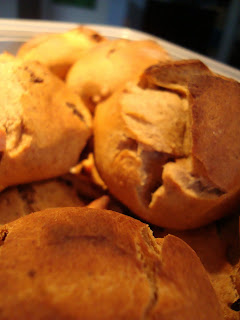
Yep. I made these!
A.
Of course the Christians took this one over! According to the Church of England, the hot cross bun has a number of meanings that are tied to Easter, which include the bread symbolizing the communion host, the spices are meant to mirror the spices that Jesus was wrapped in when laid in the tomb, and the cross to show the crucifixion... but how do they explain the fruit?
Upon further exploration, crossed buns can be traced back to pagan times, where the spring festival commemorating the goddess Eostre, included ceremonial cakes marked with a cross. The Egyptians also offered small round cakes marked with a representation of a pair of ox horns to their moon goddess. Additionally, the ancient Greeks produced little buns called "boun"offered to the gods, where the cross is speculated to represent the four quarters of the moon.
Hot cross buns as an Easter tradition began in Elizabethan times. At that time, hot cross buns were made from same dough as communion wafers, the Protestant monarchs viewed this as a Catholic hold on Britons and enforced a law that limited the sale and consumption of them to Christmas, Easter and funerals. In the time of James I, this law seemed nearly impossible to enforce and bakers were allowed to produce spiced bread throughout the year.
In modern times, hot cross buns come in all varieties such as apple and cinnamon, orange and cranberry, and toffee... but give me the traditional ones any day!
Sources:

Monday

Like a warm hug on a cold day

Welcome 2011!
The 365 random questions were meant to be completed in 2010, but life got in the way. The end of 2010 was spectacular and included a life changing adventure to Australia! I spent a number of months experiencing life, which forced me to neglect my writing, however, the Canadian winter - and a rather horrible flu - has driven me indoors and re-sparked the desire to learn about the things around me. I am feeling awful. I need a hug. Today's question is: what are some of the health benefits of hugging?

I find hugs to be one of the most comforting things in the world. I like them to be firm, arms to cradle me, with no back rub and I like them to be genuine - not out of obligation and not just for show - I mean, a real display of caring.

The reason hugs can calm and console is because hugs depress the sympathetic nervous system, slow the heart rate, lowers blood pressure and metabolic rates. When people engage in hugging, it releases oxytocin, the chemical responsible for calming, and decreases cortisol, the stress hormone. Oxytocin has been dubbed as the "cuddle hormone" which has also been linked to heart health - both in the medical sense and the romantic sense, as studies have shown the benefit of hugs, loving acts and empathetic behaviors among couples results in happier and longer lives.

Now I really need a hug.

Sources:

Graphic:

Thursday

The Fish Produced by Welch's

Further to the questions spawned by my Central American vacation; I had a look at a jellyfish, this got me thinking. I know that jellyfish are invertebrates and are completely see-through, but how do they know what to do to survive? So, today’s question is: do jellyfish have brains?

A:
Jellyfish do not have a brain or a central nervous system, yet they function on an elementary nerve net. They have limited control of movement and generally are pushed along with the ocean currents, however can propel themselves through contractions of their body. Jellyfish eat by collecting small fish, plankton and microbial organisms as they swim; they use their tentacles to sweep food into their mouths.

Sources:


Friday

Coral coloured Coral

Part of the reason that I have fallen so behind on writing and researching is because I went on holiday to Belize. I stayed in San Pedro – that’s right, Madonna’s La Isla Bonita! – and it was the most beautiful piece of paradise that I have ever seen. I snorkelled for the first time while there, and experienced the wondrous world under the sea. This spawned new questions. Today’s question is: what is coral bleaching?

A:
Coral bleaching is the whitening of corals due to stress. The skeletal structure of corals are white, but are usually covered with tiny plants called zooxanthellae algae, which provides colouration. The algae are photosynthetic and provide nutrients to the coral’s soft tissue.

If rate of photosynthetic production is too high, the coral will begin to expel some of the algae on its own, this is still considered bleaching. However, when corals experience stress on their environment, more zooxanthellae is expelled than normal, exposing the skeletal structure. Coral reefs can recover from bleaching, however it can take months to build up the same amount of algae and sometimes there is no recovery and whole reefs die off.

There are a number of triggers including: increased water temperatures, increased UV rays, changes in ocean current, increased sedimentation and low tide/wind exposure.

Thankfully, the reef in Belize has been well preserved and has not experienced extensive bleaching. Belize is very eco-friendly and provide all tourists with precise instruction on how to ensure that their reefs and marine life stay healthy.

Sources:
About.com: Coral Bleaching
Wikipedia: Coral Bleaching

Wednesday

BACK-hic IN-hic THE-hic SADDLE-hic

I have taken quite the hiatus, haven't I? I fear that all of my faithful readers - yes all three of you - will have dropped off because of this. I have been extremely busy, but have vowed to continue my quest for genius - MENSA here I come!

I have built up a list of questions throughout my days and have much to research. So let's get on it! Today's question is: what causes hiccups?

A:
A hiccup is an involuntary spasm or contraction of the diaphragm. The diaphragm is the muscle that separates the chest from the abdomen, underneath the ribcage, and has a key function in breathing. The sudden rush of air into the lungs causes the epiglottis to close, creating that "hic" sound. The epiglottis is an elastic cartilage flap attached to the root of the tongue. There are a number of causes of hiccups including: eating a large meal, eating too quickly, drinking alcohol or anything that causes irritation and compression of the diaphragm.

Hiccups usually go away on their own, however there a number of anecdotal remedies including,
scaring the person, drinking water from the wrong side of a cup, standing on your head and altering one's breath. Persistent hiccups lasting more than 48-hours should seek medical treatment.

Sources:
Beyond Biology: Why do people hiccup?
Medical News Today: What are Hiccups?